300-Hour Yoga Teacher Training Course in Rishikesh, India

To remain a teacher of high standards, it’s essential to advance your expertise. As such, you can consider joining our 300-hour yoga teacher training in rishikesh . The 28-day program will impart to you advanced knowledge and skills. Consequently, you will become a specialist in advanced yoga teaching. Also, completing this course means upgrading your qualification to the 500-hour yoga TTC , the highest course. Notably, the 300-hour program is not for beginners.

Training at the Rishikesh Yoga Ashram can be a lifetime experience. Situated beneath the Himalayan mountains, the traditional yoga school in rishikesh has a peaceful environment. Again, its nearness to the holy river Ganga creates a spiritual atmosphere. In addition, the ashram follows traditional Vedic practices. As such, our yoga training rishikesh can be the best choice for yoga courses in rishikesh . It will enable you to master advanced yoga concepts while realizing your inner self.

Rishikesh has special relevance in the yoga world. Remarkably, it is the birthplace of yoga. Mythological texts describe how the sages of the Vedic period had developed the yogic science here. This ancient knowledge has gracefully flowed through generations, preserved with devotion and carried forward into the present era. Therefore, the town is the land of authentic yoga.

Course Overview

Our 300-hour yoga teacher training course in Rishikesh is an intensive 28-day program. It can deepen your knowledge, perfect your practice, and expand your teaching skills. The curriculum of the yoga certification course is based on the teachings of the ancient yogic teachers. Therefore, learning at our Gurukul means acquiring authentic yoga knowledge. Moreover, our teachers are experts. And, they learned yoga under the guidance of Himalayan masters. As such, they are competent to impart pure knowledge of yogic science and the best teaching methodologies to you in our yoga courses in Rishikesh.

After completion of the yoga training course, you will be an expert with in-depth knowledge and sharp skills. There are more takeaways from the Yoga Alliance (USA)-recognized 300-hour YTTC.

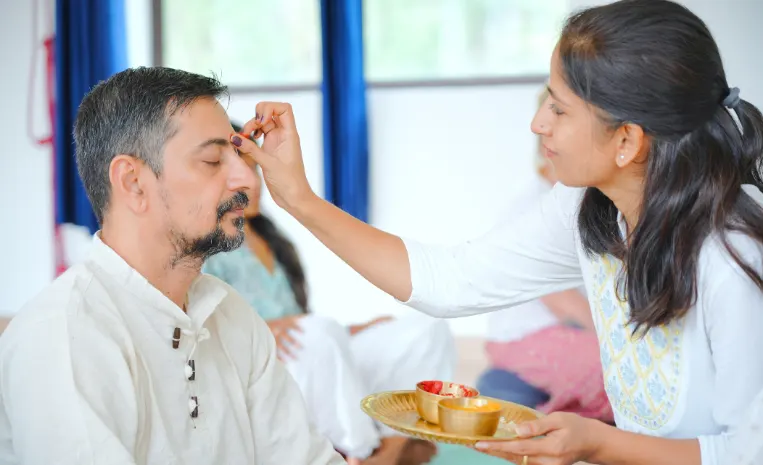
Spiritual subjects and a yogic lifestyle at our traditional ashram will enable you to discover yourself. By connecting your body and mind, our spiritual practices will help to awaken your inner self.

Students Reviews

Eligibility Criteria

The 300-hour yoga teacher training course in Rishikesh is for experienced teachers. In other words, beginners are not eligible. Also, there is no age restriction. Again, individuals who do not want to pursue teaching can also join the course. That way, they can gain additional knowledge to deepen their personal practice and support their self-growth.

If you want to join this course, you must:

  • Have completed the 200-hour YTTC
  • Must hold an RTY 200 certificate
  • Must hold an RTY 200 certificate
  • Be in good physical and mental condition, as the advanced course is intensive

Course Timeline

Check In Icon

Arival & Registration

Date: 2rd of every month

Time: 10:00 - 17:00 IST

Opening Ceremony Icon

Welcome Ceremony And Course Start

Date : 3rd of every month

Time : 09:00 - 11:00 IST

Evaluation Icon

Evaluation & Feedback

Date: 29th of the month

Time: 09:00 - 11:00 IST

Departure Icon

Certification & Departure Date

Date: 30th of the month

Time: 09:00 - 11:00 IST

300 Hour (28-Days) Yoga Teacher Training Curriculum

Ashtanga Yoga is a well structured style of Yoga developed by K Pattabhi Jois in the 20th century. Ashtanga Yoga follows a series of asana practices that requires strength, concentration and agility to perform. During the course the focus will be revision of the primary series and introduction of the Secondary series. Ashtanga Yoga helps in creating a connection with mind, body and breath to help in balancing the energies.

What will you learn?

  • Practice of Primary Series of Ashtanga Yoga with correct Alignment and Modifications
  • Introduction of the Intermediate Series of Ashtanga Yoga
  • Role of Drishti in every asana in the series.
  • Synchronizing the breath and Bandas in each asana
  • Learn to teach, adjust and modify the practice for beginner students 
  • Understanding the series for the self- practice

Mysore-Style Ashtanga Sequence

  • Ashtanga Surya Namaskar 
  • Ashtanga Standing Postures
  • Intermediate Postures
  • Finishing Postures

Vinyasa Flow is a series for continuous practice f the asanas flow that is often described as Meditation in Motion. Each practice of the postures is synchronised with breath and great concentration that turns to the most energetic flow.

What will you learn?

  • Understanding the coordination of vinyasa flow movement with breath 
  • Importance of movement and transition between different asanas
  • How to teach and give modifications for the beginner students
  • Understanding the flow movement to make own self-practice flows

Vinyasa Yoga Sequence

  • Dynamic and Static Warm up
  • Vinyasa Surya Namaskar - Traditional Sun Salutation Variations 
  • Vinyasa Standing Flow - Forward Bend Sequence, Hip Opening Flow, Balance Postures
  • Vinyasa Sitting and Twisting Flow - Sitting posture with twisting and forward bending
  • Vinyasa Prone and Supine Flow - With backward extensions and inversions
  • Vinyasa Closing Sequence - Cooling & Restorative postures

During the 300 Hours course, you will be able to understand the pranayama on the deeper level with the introduction of advanced practices of holding the breath. The practice will help in attaining maximum connection between the body and mind while offering an overall synchronized breathing experience for other styles of yoga. The course will unfold the most advanced techniques of locks and practice to reach tranquility.

What will you learn?

  • Understanding connection between Prana and Pranayama
  • Understanding the different aspects of breathing
  • Understanding all about nostrils and activating them
  • How does the prana flow and its Functions 
  • Understanding how to make sequence for the self practice 
  • Sequencing and teaching of the Pranayama

Different Types of Pranayama

  • Yogic Breathing
  • Nadi Shodhana Pranayama
  • Surya Bhedi Pranayama
  • Chandra Bhedi Pranayama
  • Ujjayi Pranayama
  • Bhastrika Pranayama
  • Bhramari Pranayama
  • Sheetali Pranayama
  • Sheetkari Pranayama
  • Kapalbhati Pranayama

Mudras are the gestures that help channelising, distribution and preservation of the Prana. During the course, you will be able to advance your practice that will help in uplifting the energy.

What will you learn?

  • Introduction to Yoga Mudras
  • Understanding the position of different elements in your hands
  • Importance of the Mudras during the self-practice
  • Jnana mudra
  • Chin mudra
  • Dhyana mudra
  • Yoni mudra
  • Bhairava mudra
  • Nasikagra drishti mudra
  • Vairagya mudra (dispassion)
  • Abhaya mudra (blessing, fearlessness)
  • Vayu mudra (air)
  • Pran mudra (prana)
  • Prithvi mudra (Earth)
  • Surya mudra (Sun)
  • Varun mudra (God of water)
  • Ashwini Mudra
  • Vajroli Mudra

While doing yoga, your body generates a lot of energy or prana. With mudra, channel this energy and with bandhas, control and maintain it in the body to prevent it from draining. When done right, the bandhas can also help awaken the Kundalini.

What will you learn?

  • Meaning of Bandhas and its importance
  • Draining of Pranas and how to retain them
  • Understanding the chakras and the role of Bandhas
  • Benefits and risks of the practices
  • Practices (for intermediate and advanced level)

List of Bandhas

  • Agnisar (for Uddiyana preparation)
  • Bahir kumbhaka (external retention)
  • Antar kumbhaka (internal retention)
  • Mula bandha
  • Uddiyana bandha
  • Jalandhara bandha
  • Maha bandha

Shatkarma Kriyas is one of the ancient yogic practices for which years of practice and patience are required. Regular practice of these kriyas helps in cleansing the body internally using different yogic techniques. The course will unveil these techniques and students will learn from the teacher how to perform and cleanse their bodies for better immunity and purity.

What will you learn?

  • What is Shatkarma
  • Benefits and risks of Shatkarma
  • Who should practice and who should not
  • Preparation for Shatkarma
  • Practices post Shatkarma

Dhayana is the eighth limb described by Sage Patanjali. Regular practice of Meditation will help in developing self-awareness, emotional balance, and mental clarity. Helping you not only in deepening your practice but also helps in betterment of your day-to-day life. Dhyana is a journey of enlightenment which helps not in removing the external disturbances but also helps in internalisation for deeper connection with mind and body.

What will you learn?

  • Understanding the purpose of meditation and why it is important in spiritual journey.
  • Understanding different types of meditation as per different paths of yoga.
  • Understanding Dharana, Dhayana and Samadhi
  • Importance of Mantras for regular meditation practice
  • Discovering what works best for self-practice

List of Meditation Techniques

  • Traditional Himalayan meditation
  • Om Mantra meditation
  • Breath awareness (Anapana)
  • Trataka meditation
  • Silent meditation
  • Practice Japa Ajapa meditation
  • Antar Mouna Dhyana meditation
  • Chakra awareness
  • Kirtan meditation evening
  • Active meditation
  • Mindful Meditation

Yoga Nidra (psychic sleep) is sleeping in awareness in such a way that takes you from a conscious state to a superconscious state of awareness. The goal is to shut out the five senses so the mind can attain pratyahara. 

What will you learn?

  • Understanding the importance of breath awareness for Yoga Nidra
  • How Yoga Nidra helps in synchronising mind body and breath
  • What are the four stages of consciousness
  • How Yoga Nidra will help in healing?
  • What are the benefits and precautions needed during the practice of Yoga Nidra

Mantras use the power of sound to calm the mind and balance energy. Regular chanting enhances focus, relaxation, and inner harmony.

What will you learn?

  • What is Mantra – Understanding its meaning, significance in life, and the process of personal mantra initiation.
  • Healing of body with mantras
  • Use of mala in mantra recitation
  • How will mantra help you in your life?

Yoga Philosophy helps in understanding not just the philosophy behind the yogic practices but also understanding the philosophy behind life. Yoga Philosophy will help you in understanding the key concepts, the importance of self-realization, and you will be able to connect practical and spiritual aspects of Yoga.

What will you learn?

  • Introduction to Yoga Philosophy
  • Yoga Sutras of Patanjali
  • Concept of God and Soul
  • Types of Yoga - Bhakti Yoga, Karma Yoga, Gyan Yoga, Raja Yoga, Kundalini Yoga, Prapti Marg, & Nada Yoga
  • Ancient Scriptures - The Vedas
  • Introduction to the Upanishads
  • Introduction to Bhagwat Geeta
  • Introduction to Chakras and Kundalini
  • Theory of Karma

Yogic Psychology helps in bridging the gap of traditional yogic philosophy and modern lifestyles. Yogic psychology helps in bringing self-awareness and helps you to find the emotional balance in the modern technological times.

What will you learn?

  • Understanding the meaning of Yogic Psychology
  • Importance of Balanced State of Consciousness
  • Understanding the modern lifestyle behaviour through ancient scriptures.
  • How different mindful techniques helps in calming psychological responses
  • How to achieve emotional balance through application of traditional yogic philosophy

Yoga is not only a set of postures to keep you fit but also a holistic lifestyle and philosophy that enhances one's mind, body, and soul. A yogi's lifestyle opens doors for every individual to the highest form of knowledge.

What will you learn?

  • Understanding what a yogic lifestyle is, who a yogi is, and why a healthy lifestyle matters
  • Importance of a yogic lifestyle, including vegetarian/vegan diet and basics of the yogic diet
  • Daily routines: morning–evening practices, sleep cycle, and preparation for restful sleep
  • Living with awareness: behaviour toward others and following Yamas & Niyamas

As the journey of Ayurveda has already started during the 200 hour yoga teacher training course, here at the 300 Hour yoga teacher training course, you will deepen your understanding of this ancient holistic study that helps you in harmonizing the three Doshas - Vatta, Pitta, and Kapha.

What will you learn?

  • Understanding the concept of Trodoshas and Prakriti of the body
  • Understanding the importance of Self-Abhyangam (Padabhyangam, Uroabyangam)
  • Understanding the Akashi Tarpana or Eye Treatment
  • Introduction to Su-jok practices
  • Relation of Pancha Mahabhut with Marma and the effect of emotional imbalance
  • Understanding the role of Marma in healing
  • Understanding the importance of Home Remedies

Applied Ayurveda

Applied Ayurveda workshops help you in applying the concepts of Ayurveda in the practical form to lead a balanced and holistic lifestyle which in harmonization of individual prakriti and also with nature.

What will you learn?

  • Practice of Self-Abhyangam (Padabhyangam, Uroabyangam)
  • Practice of Akashi Tarpana or Eye Treatment
  • Practice of Su-jok Techniques
  • Practice of the three mainMarma and Seven mahamarma with Mantra
  • Substitute Home Remedies


In yogic practices, it is important to understand the anatomy in a holistic way so that it will help you in understanding the effects of the traditional practices of yoga deeply on the body. During the course, you will be able to respond and not react. 

What will you learn?

  • Understanding the Musculoskeletal System, How muscles work for movements and position of body and learning to use for best results
  • Understanding the anatomy of 9 major Joints with 9 Major bandhas of body for pranic healing and stability of body
  • Understanding the dynamic, static, active, passive movements with proper safety and optimization
  • Understanding of Neuromuscular systems how Muscles are guided and manipulated by our mind, actions, thoughts , emotions and daily expressions
  • Science of respiration while exercising, practicing Asana, and in day to day life , how breathing could help with stress, anxiety, stamina, efficiency of energy and Optimal health
  • Science of Focus , balance, coordination and movements using scientific researched yogic tools to optimise the bodily functions and health

During the course you will be able to understand what practices are necessary to ure the diseases. This understanding will not only help you in deepening our own self-practice but also help you in teaching to someone who has any diseases.

What will you learn?

  • Head and Neck Diseases
  • Heart and circulatory Problems
  • Disorder of Respiratory System
  • Disorder of Digestive System
  • Problems of Obesity
  • Menstrual Disorders and much more..

Spiritual Yoga Therapy

During the course, you’ll understand the yogic approach to healing through lifestyle modifications, asanas, pranayama , and relaxation techniques, all tailored to promote recovery and balance. These sessions empower aspiring yoga teachers to apply yoga therapeutically, enabling others to lead healthier, more balanced lives through the timeless wisdom of yoga.

What will you learn?

  • What is Yoga Therapy and its scope in holistic wellness
  • Understanding the Prana, Doshas, Gunas, Agni, Koshas and their role in holistic wellbeing
  • Yogic principle of Food
  • Therapeutic Planning and Disease Management
  • Therapeutic benefits of Kriyas, Asana, Pranayama, Mudras and other yogic practices

During the course, you will not only understand the right alignment of each asana but also understand how you do the self-alignment while you are doing your own practice and how to adjust others when you are teaching. A little tweak in the movement can help avoid serious injuries and pain. 

What will you learn?

  • Understanding the fundamentals and the need for aligning the posture.
  • Learning alignment of different postures while practicing Standing, seated, forward bending, backward bending, inversions and much more and right adjustments for them.
  • How making small changes in the movement for maximum benefits and minimum injuries
  • Understanding hands on adjustments and verbal adjustments

Becoming a Certified Yoga Teacher will be incomplete without understanding how to conduct a class all the while managing the proper flow and correcting the students. All of this and much more will be learned during the Teaching Methodology Session.

What will you learn?

  • How to sequence a class - step by step approach
  • How to work with different level of the students simultaneously and how to guide them
  • Importance of the time management in the class
  • Qualities of a teacher and importance of use of proper voice during the class
  • Principles of demonstration, observations, assisting and correcting during the class

Teaching Practice

There will be teaching practice done by all the participants of the batch in the presence of the teacher that will help you in giving hands-on practical experience.

Each participant will have an option to choose from following one-to-one sessions. Kindly note only one of the following sessions will be complimentary, students can select from the following. If they wish to have more than one then you can connect with the team.

  • Emotional Healing Consultancy & Massage
  • Ayurveda Consultancy and Massage
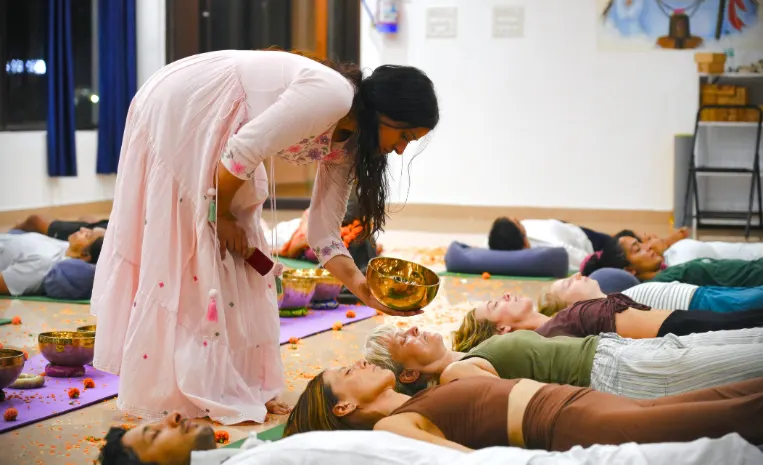
  • Sound Healing Session

Group Complimentary Sessions

Depending on the availability of the teachers, only one session from each of the following will be conducted in every batch:

  • Enriching Add-On Workshops
  • Ayurveda workshop

One Complimentary Healing Group Session

  • Sound healing
  • Emotional healing
  • Chakra healing

One Complimentary Group Session by the river

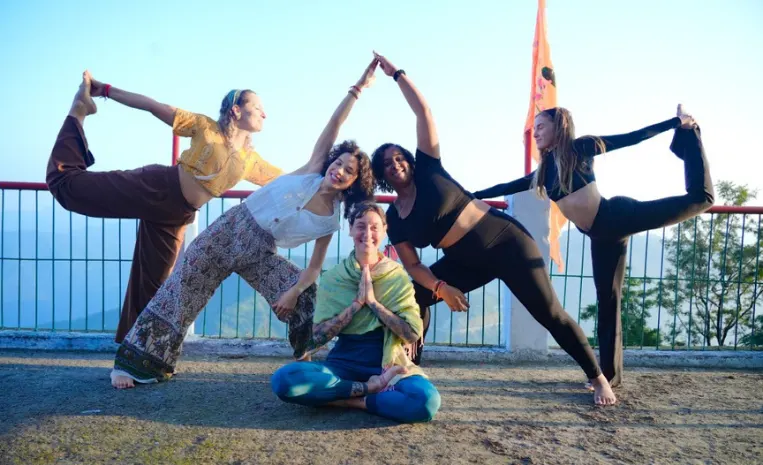
  • Acro yoga
  • Pranayama
  • Meditation

One Complimentary Active Group Session

  • Bollywood dance session
  • Body movement session

Complimentary Group Art Activities

Rishikesh Yoga Ashram offers hands-on experiences in traditional Indian arts such as Mehendi (Indian tattoo), floral Rangoli, and Mandala art—perfect opportunities to connect, collaborate, and create meaningful memories together.

Daily Schedule

  • 05:30 Wake Up
  • 06:00 - 07:30 Mysore-style Ashtanga Yoga
  • 07:30 - 09:00 Pranayama / Kriya / Mudra / Bandha / Mantra
  • 09:00 - 10:00 Breakfast
  • 10:00 - 11:00 Yoga Philosophy & Yogic Psychology
  • 11:00 - 12:30 Alignment & adjustment / Teaching Practice
  • 12:30 - 13:30 Lunch
  • 13:30 - 14:30 Rest
  • 14:30 - 15:30 Functional Anatomy / Yoga Therapy
  • 15:30 - 16:00 Tea Break
  • 16:00 - 17:30 Vinyasa Flow
  • 17:45 - 18:45 Traditional & Dynamic meditation
  • 18:45 - 19:00 Yoga Nidra
  • 19:15 - 20:15 Dinner
  • 22:00 Lights Out
NOTE: The schedule is subject to change based on weather, teacher availability, and ashram requirements.

Begin your Journey

  • 02 Jan - 29 Jan 2026Seats: Not Available
  • 01 Feb - 28 Feb 2026Seats: Not Available
  • 02 Mar - 29 Mar 2026Seats: Not Available
  • 02 Apr - 29 Apr 2026Seats: Not Available
  • 02 May - 29 May 2026Seats: Not Available
  • 02 Jun - 29 Jun 2026Seats: Not Available
  • 02 Jul - 29 Jul 2026Seats: Available
  • 02 Aug - 29 Aug 2026Seats: Available
  • 02 Sep - 29 Sep 2026Seats: 12 left
  • 02 Oct - 29 Oct 2026Seats: Available
  • 02 Nov - 29 Nov 2026Seats: 8 left
  • 02 Dec - 29 Dec 2026Seats: Available
COURSE DURATION:
28 DAYS

COURSE FEES:

INTERNATIONAL STUDENTS
USD $1499Private Room
USD $1199Twin Sharing Room (For Two Person)
USD $999Triple Sharing Room (Only for Three Female )
USD $799Quad Sharing Room (Only for Four Female)
ONLY INDIAN STUDENTS
INR 74,999Private Room
INR 59,999Shared Room
INR 39,999Without Accommodation
Note:A valid national ID (such as an Aadhaar card) is mandatory for Indian students.
BOOK NOW

Inclusions

Arrive effortlessly with our complimentary shuttle service from Dehradun Airport directly to the ashram
Stationary and course mannual
Yoga Cleansing Kit
Your daily essentials—Wi-Fi, hot & cold water, and more—are included
Yoga equipment – mats, tools, and props for practice
Explore with guided excursions & local outings
Refined living spaces with an en-suite bathroom
Certificate
Freshly prepared vegetarian Sattvic meals
Sundays Reserved for Rest

Exclusions

Doctor on call
Additional AC / Heater Electricity Charges - (300 USD / 200 USD) will apply.
Ayurvedic Panchakarma Treatments
Travel essentials: visa, flights & private transfers
Rooms offered pre/post course (per night; food not included)

Things to Bring With You

White Dress for the Opening and Closing Ceremonies
Comfortable and practice-friendly yoga wear
Weather-ready attire advised
Personal care essentials (toiletries & towel)
Medicines & essentials (prescribed, cold/flu, allergy, eye care)

Complementary Sessions

During the course, you will have the opportunity to enhance your learning. Our complimentary sessions provide an opportunity to broaden your yoga knowledge in different dimensions.

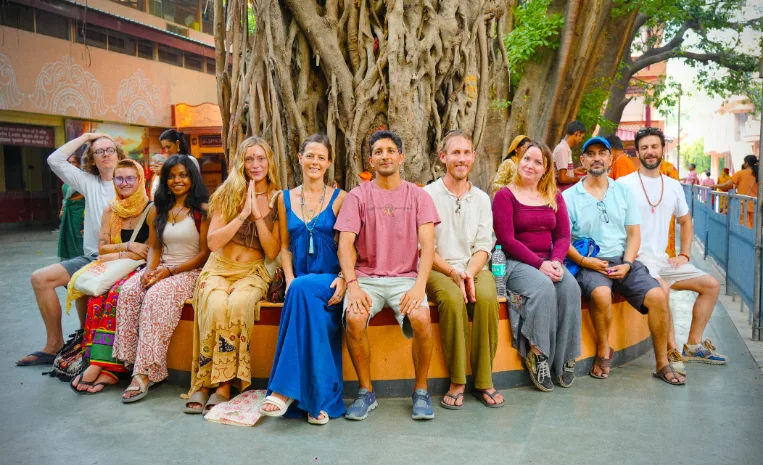
To help students experience the cultural and spiritual essence of Rishikesh, we take them on a cultural tour in the town.

Sound Healing: Uses therapeutic sounds and vibrations to calm the nervous system, reduce stress, and bring the mind into deep relaxation.

Emotional Healing: Helps release stored emotional blocks and imbalances, supporting mental clarity, emotional balance, and inner peace.

Chakra Healing: Focuses on balancing the body’s energy centers (chakras) to improve energy flow, harmony, and overall well-being.

This yoga therapy stretches the human body after calming it. Restorative Yoga Therapy promotes deep relaxation. Its key benefits are:

  • Increased Relaxation
  • Better Sleep
  • Pain reduction
  • Enhanced quality of life

This special yoga method combines partners with yoga poses. That way, Acro yoga builds coordination, balance, and strength between them.

These complimentary benefits are provided only for private or twin accommodation bookings and are not available for Indian students.
Certification

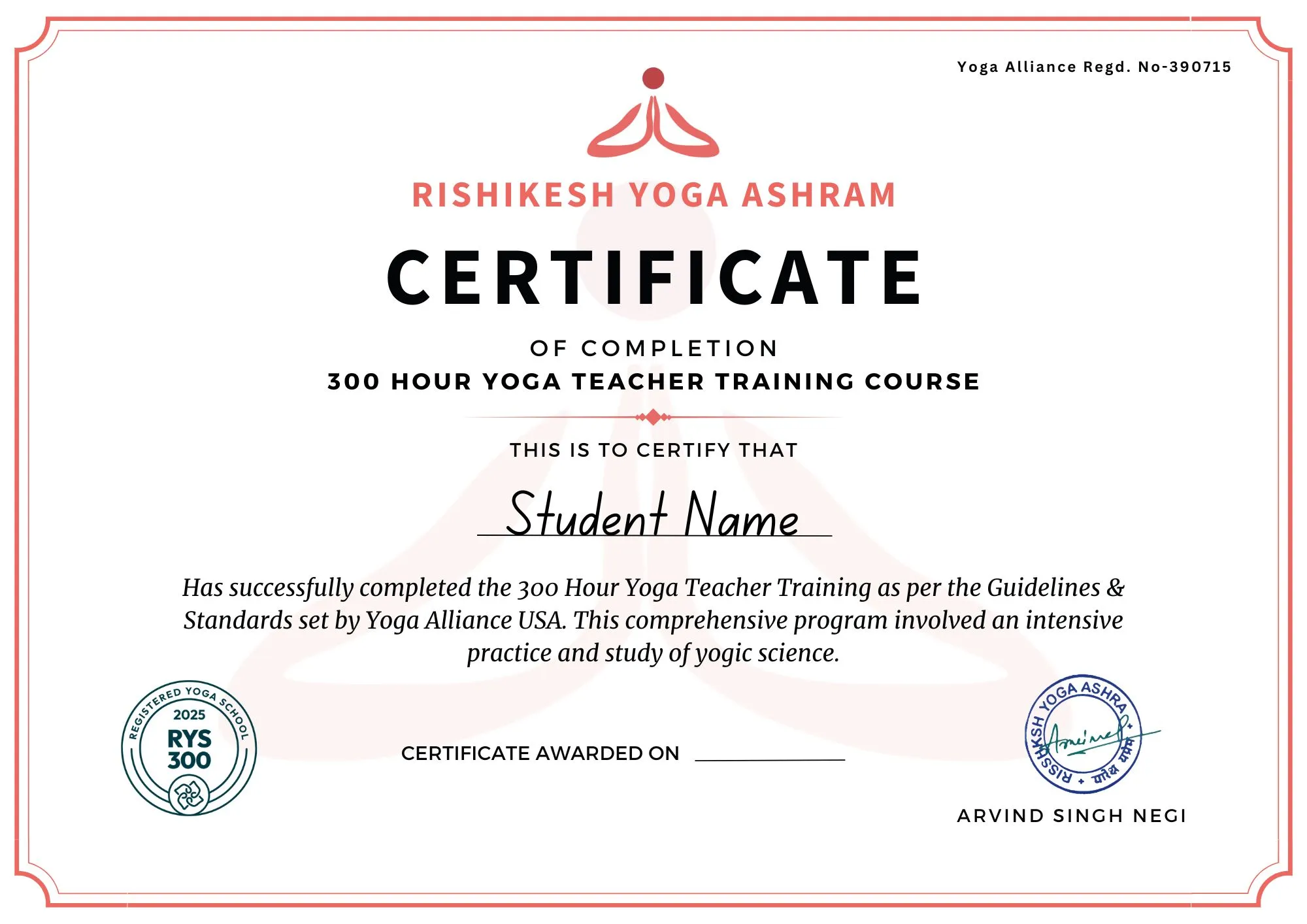
Certificate image 1
Certificate of Completion
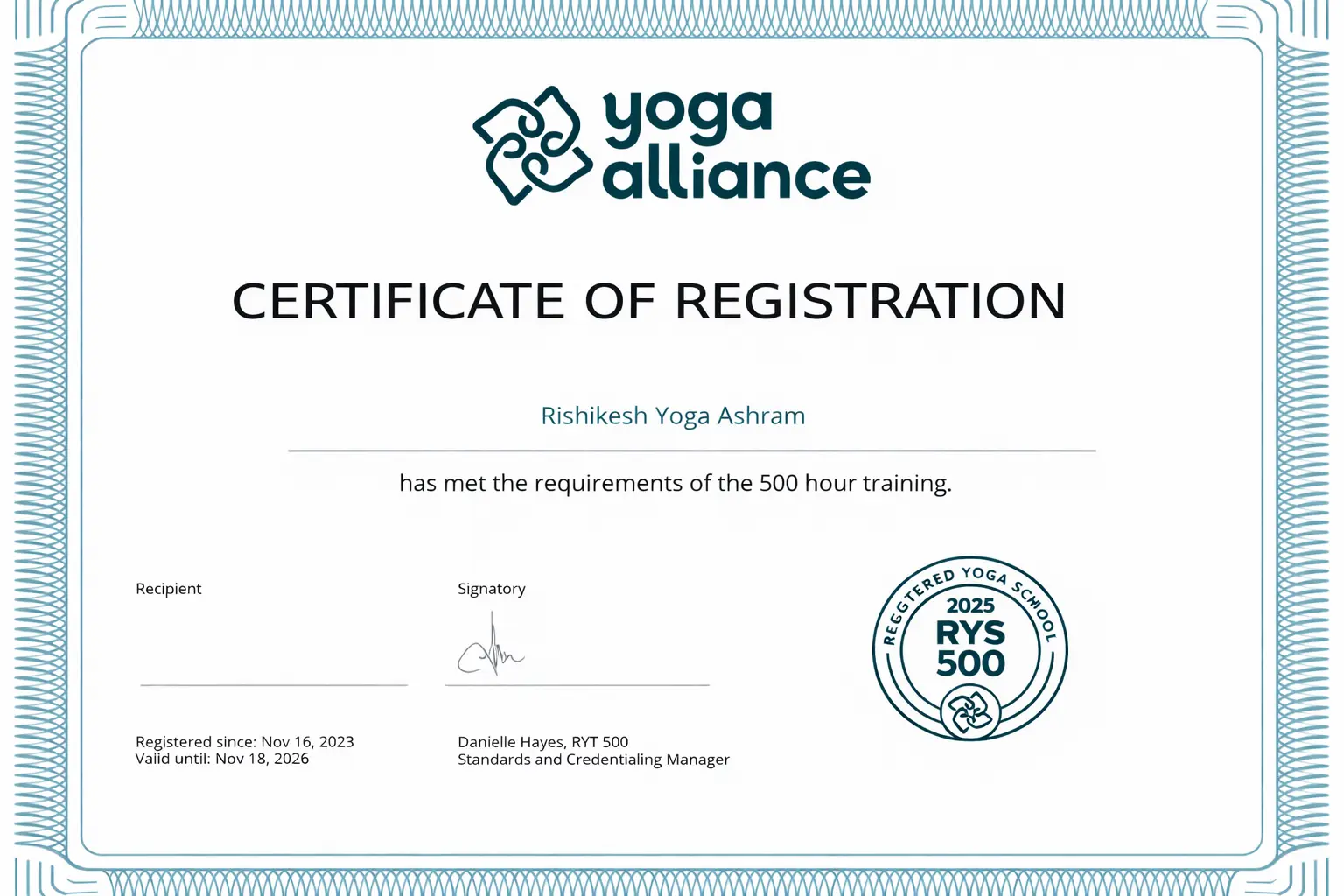
Yoga Alliance Certificate

You will receive the 300-hour YTTC certificate upon qualifying in a thorough assessment. You will have to demonstrate your understanding of the course curriculum. Qualifying for the certificate will make you eligible to apply for the RTY 500 certification from Yoga Alliance, USA.

The evaluation includes:

  • Practical teaching focused on asana, pranayam, and teaching methodologies
  • Objective paper based on MCQs of all subjects
  • Submission of assignments
  • Assessment of discipline, attitude, and overall behaviour throughout the course


Why Choose the 300-hour YTTC?

The program will enhance your advanced knowledge with advanced concepts. That is why, you can consider undergoing the 300-hour yoga teacher training course in Rishikesh. It will empower you to attain the highest levels of mastery as a yoga teacher. The program will impart a deeper understanding and in-depth knowledge of yoga philosophy, anatomy, teaching methodology, and advanced asanas.

The main reasons for joining our 300-hour YTTC could be:

  • 1. Globally Recognized Certification :

    Yoga Alliance (USA) has certified the course. Hence, the certificate carries global recognition. As such, your recognition as an international yoga teacher will remain intact. That means you are eligible to teach globally. And, you can register as a Registered Yoga Teacher (RYT).

  • 2. Experienced and Expert Instructors :

    You will learn and practice advanced yoga under the guidance of experienced instructors. They are experts and implement the best teaching methodologies. They acquired deep knowledge and sharp skills by learning under the guidance of Himalayan masters. Our instructors impart authentic yoga knowledge to students.

  • 3. Advanced Curriculum :

    The course will teach you yoga subjects, such as yoga philosophy, anatomy, teaching methodology, and advanced asanas. That way, you will deepen your understanding of yogic concepts and refine your skills. In addition, advanced yoga practices will strengthen your body, mind, and awareness.

  • 4. Increased Credibility and Visibility :

    The 300-hour YTTC signifies advanced knowledge and skills. As such, certificate holders attract higher credibility and visibility. As you will undergo advanced training, you will gain a reputation as experts. Therefore, your standard in the global teaching community will scale up.

  • 5. Enhanced Teaching Skills and Confidence :

    Advanced training will deepen your knowledge of yoga concepts. As such, you will be able to explain more effectively. That way, you will become a more expert yoga teacher. And, your confidence will strengthen.

Guide to Traveling to India

Apply online for an e- Tourist Visa for such short courses . Most countries implement quick approval. Print your visa and carry it with your passport.

Jolly Grant Airport, Dehradun, is the nearest. And, the Rishikesh bus stand and railway stations are nearby. If you land at Indira Gandhi International Airport, New Delhi, there are four options to reach our ashram.

  • Flight : Take a flight to land at the Dehradun airport. After that, book a cab to reach our yoga school. Alternatively, inform us of your arrival beforehand. We will arrange for the pickup.
  • Taxi : Hire an outstation cab at the New Delhi airport to arrive at our ashram.
  • Bus : Catch a bus from New Delhi to Rishikesh. You will get cabs and other transportation facilities from the bus stand to our school.
  • Train : Board a train from New Delhi to Rishikesh. After deboarding, book a cab or an auto rickshaw to reach our ashram.

We also offer comfortable, reliable, and safe taxi services. They are for pickup and drop-off, covering the following points:

  • New Delhi Airport
  • Dehradun Airport
  • Rail/Bus stations of Rishikesh and Haridwar
  • Nepali Farm


Cab fares are as follows:

  • Delhi Airport: ₹6000 / $70 (if two share: ₹4000/ $47 each)
  • Dehradun Airport: ₹2000 / $23 (if two share: ₹1500 / $18 each)
  • Within Rishikesh: ₹1500 / $18 (if two share: ₹1000 / $12 each)

We also offer a free cab service to pick up from Dehradun Airport at 10:00 AM and 4:30 PM on the official arrival date.

Dynamic weather conditions prevail in Rishikesh. The weather varies from pleasant to mildly intense during the year.

Summer is between March and June. Temperatures range from 25 to 38 degrees centigrade. We recommend that students coming to our residential ashram during the period bring light clothes.

July to September is the monsoon season. Rain showers occur often. That makes it difficult to take part in adventure activities. Also, rafting becomes impossible due to the rising water levels of the holy river Ganga.

October to March has pleasant weather. It is the best time to enjoy the town’s beauty, visit temples, take part in adventure activities, or go rafting.

Winter is between December and February. The temperature drops to 6-8 degrees centigrade. We recommend students coming to our yoga ashram during these months to bring warm clothes.

Local shops for daily needs, yoga gear, and snacks, apart from pharmacies, are within walking distance of the school.

Currency exchange facilities are available in Rishikesh. In addition, there are ATMs of reputed banks nearby.

In India, electrical plugs are of C, D, and M types. And, the voltage is 230V. So, carrying a universal adapter is advisable.

Local SIM cards are available at the airport and shops in Rishikesh. You can subscribe to such a card by verifying your identity through your passport. We also provide them at the ashram-just let us know at the office when you arrive or later if you need one.

Questions You May Have

It is a credential by Yoga Alliance (USA) for yoga teachers who complete a certified YTTC from a Registered Yoga School (RYS). The credential also allows them to list themselves on Yoga Alliance’s official website.
The 300-hour YTTC is an advanced program compared with the 200-hour YTTC. It teaches advanced concepts and skills.
No, you cannot. Completing a 200-hour YTTC is mandatory.
Yes, you do these courses from two different schools. However, the schools must be certified by the Yoga Alliance (USA). Again, you can register for the 500-hour YTTC in such a case.
Although the course focuses on yoga teachers, people who do not want to pursue a teaching career can also join. That will deepen their personal practice and support their self-growth.
The course deepens their knowledge, helping them to become more efficient yoga teachers. In addition, the 300-hour YTTC increases their visibility.
Although there are no specific dresses for performing yoga, comfortable and loose clothes are preferable.
1
💬 Chat with us on WhatsApp!
Enquire Now

Enquiry Form